

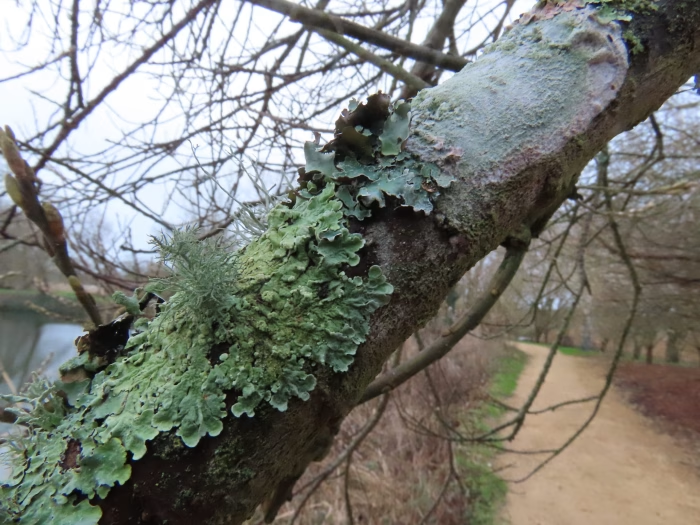
Our resolution for new year is to learn more about lichens. We seem to support quite a spectacular array of them on our trees. There are three main types that are structurally quite different: foliose or leafy lichens, fruticose or bushy lichens and crustose or crusty lichens. Once you start looking, they aren’t just on the trees. Perhaps, last time you visited, you actually sat on some!
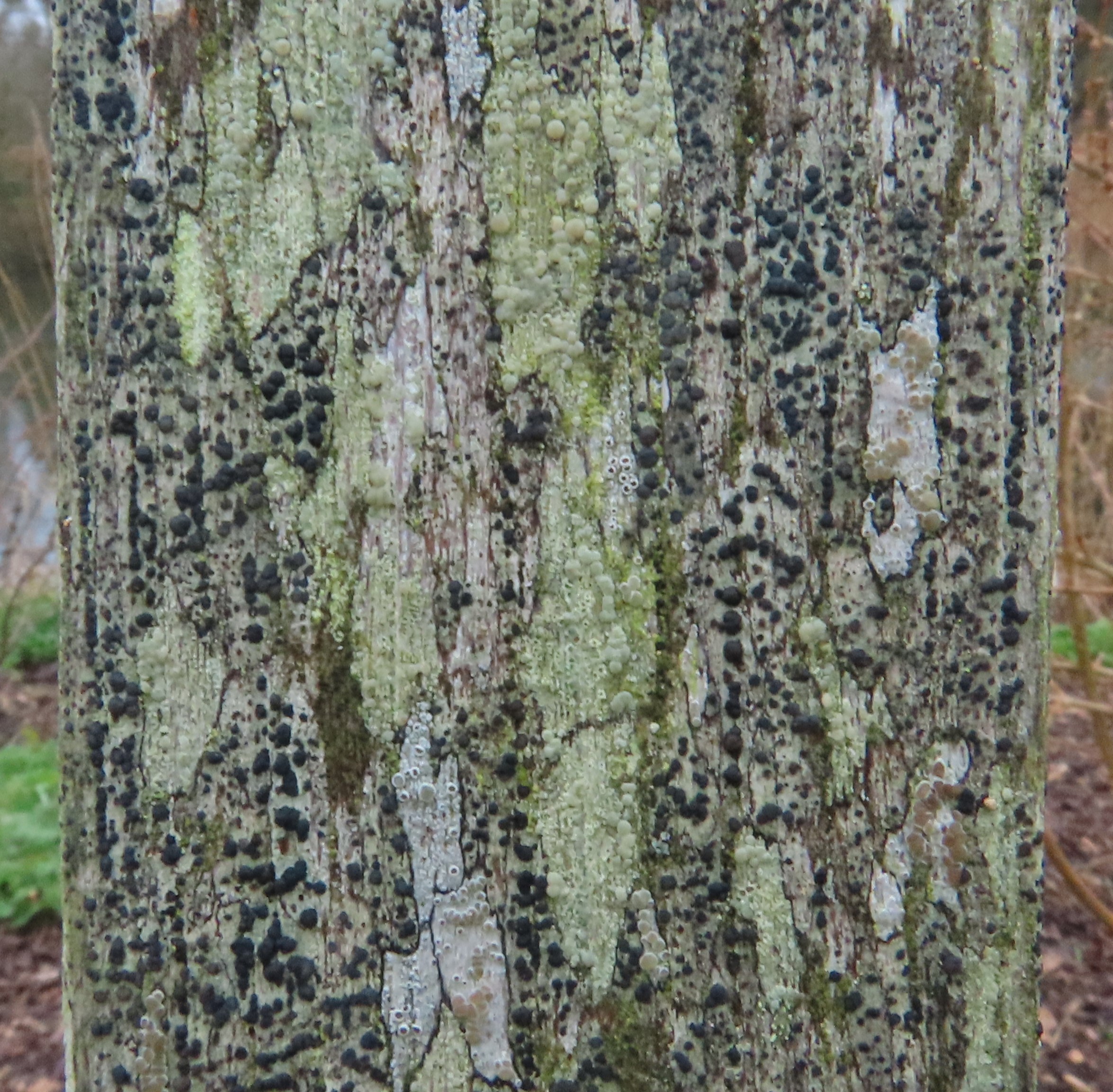
The circular structures, found on some lichens, are fruiting bodies or apothecia but curiously the spores they release cannot produce a new lichen by themselves because lichens are in fact a combination of a fungus and a micro-organism (eg: Alga) capable of photosynthesis.

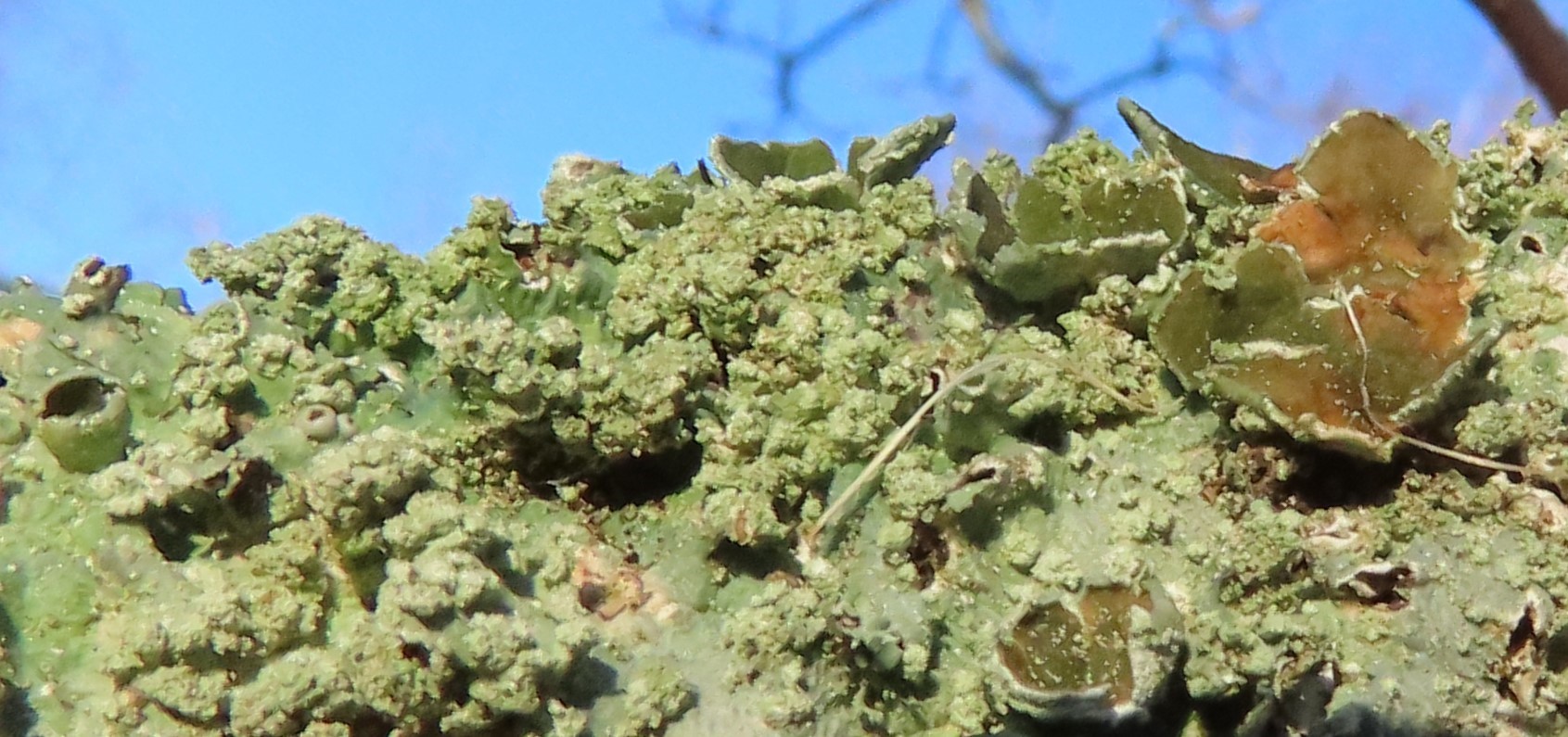
There is another reproduction strategy, soredia which are granular packages of both components but that is asexual reproduction and only some lichens produce them.
There will be an opportunity to look at lichens (and lots more), under the microscope, on 12th March when we have a Wild Wednesday during British Science Week with Prof. Genoveva Esteban from Bournemouth University.